Operating a commercial vertical project along the Interstate 4 corridor or downtown Orlando demands specialized upper-floor sanitation hardware. A standard 230-pound poly portable restroom cannot simply sit on an…
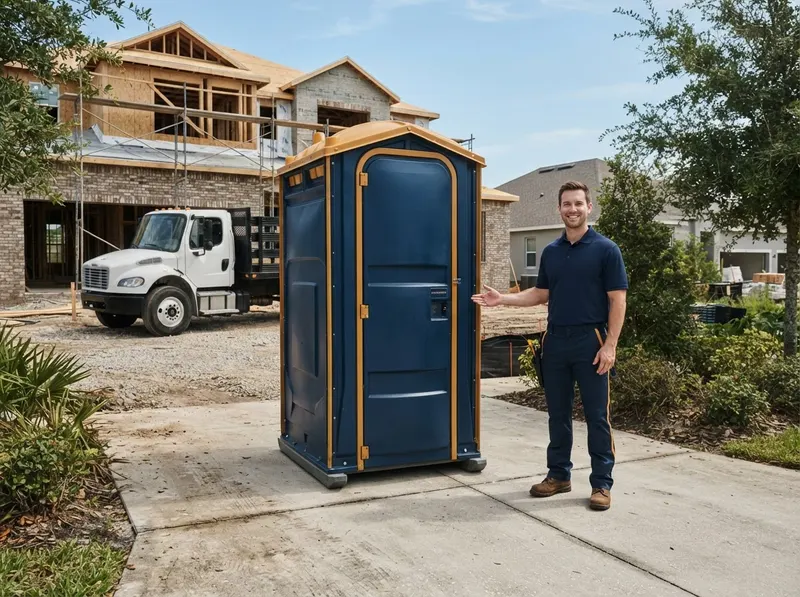
Operating a commercial vertical project along the Interstate 4 corridor or downtown Orlando demands specialized upper-floor sanitation hardware. A standard 230-pound poly portable restroom cannot simply sit on an uncurtained 14th-story slab; severe central Florida thermal updrafts and high-elevation winds require heavy-duty reinforced roll-around units or heavy-gauge steel lifting cages tested for crane picks. For builds like medical towers in Lake Nona or mixed-use redevelopments near the SoDo District, elevator shafts and personnel hoists dictate physical unit footprint. Crane-certified lift units feature welded overhead eyelets and balanced balance-beam rigging points rated for 1,500 pounds, allowing tower cranes to set units onto cantilevered landing decks safely. When floor plates are fully enclosed, narrow-profile rolling units fitted with 8-inch non-marking urethane casters roll through standard 36-inch commercial rough door openings, fitting directly inside construction material hoists.
Servicing elevated site units requires designated logistics planning. Standard ground vacuum trucks carry 30-foot suction hoses, but multi-floor projects require crane-down schedules or routing 200-foot specialized non-collapsing riser hoses up buck hoist corridors to access tanks positioned above level 4. If a project runs a tower crane, flying units down to a designated ground staging zone every Tuesday and Friday morning provides the cleanest service loop. If crane time is strictly reserved for steel or curtain wall installation, technicians connect reinforced high-vacuum run-lines directly into the building's hoistway to evacuate the 38-gallon integrated holding tanks on-floor. The trade-off between hoist transport and high-reach suction lines comes down to hoist run-time versus floor staging space: dedicated crane-down units occupy zero hoist run-time but require certified rigger availability, whereas caster-mounted interior units roll straight into buck hoists during off-peak morning hours.
OSHA standard 29 CFR 1926.51 mandates specific toilet ratios per workforce volume, requiring 1 facility for 20 or fewer employees and 1 toilet seat plus 1 urinal per 40 workers on crews over 200. On large commercial frameworks in MetroWest, Baldwin Park, or College Park, transit time down 18 floors to ground-level latrines reduces individual crew productivity by 15% to 20% daily. Positioning one rolling high-rise unit for every 15 structural ironworkers or drywall installers directly on active fit-out decks stops hoistway bottlenecks. All bookings require a baseline site delivery review to confirm crane hook capacity, rigging tag validity, and hoist interior clearance before mobilization.
Every job gets a firm, written price after a free on-site visit.
Tell us about your high-rise construction portable toilet job in Orlando and we'll send a clear, written quote, usually the same day.
 Falcon Portable Toilets